Source Rectangular Flag Insulated Terminal for Transmission, Automotive, and Electronics
Compare 30 listings for rectangular flag insulated terminal options suitable for electrical signal transmission, automotive wiring, and general electronics. Buyers can review specifications like wire range, current capacity, and insulation materials to find the right component.
Key considerations
Products List






Comprehensive Sourcing Guide
Strategic Sourcing Guide for Rectangular Flag Insulated Terminals
Understanding the Product Category and Technical Architecture
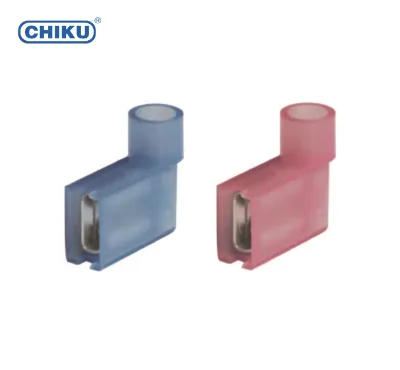
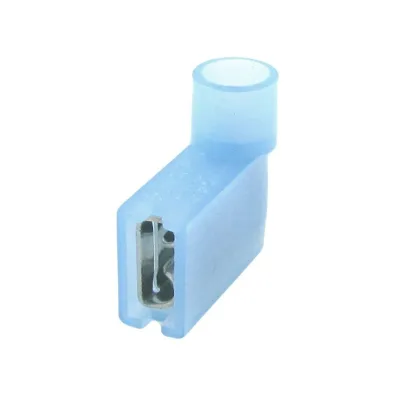
Rectangular flag insulated terminals represent a specialized subset of electrical connection hardware designed to facilitate secure, low-resistance, and easily identifiable wire terminations. In the context of B2B procurement, these components are distinct from standard spade or ring terminals due to their specific geometry and the "flag" configuration, which often allows for a flat, tab-like profile suitable for stacking or specific panel mounting arrangements. The core product facts indicate that these terminals are primarily manufactured from copper, a material selected for its superior electrical conductivity and mechanical durability. The insulation material is typically identified as PA (Polyamide), which provides necessary dielectric strength and resistance to heat and chemicals.
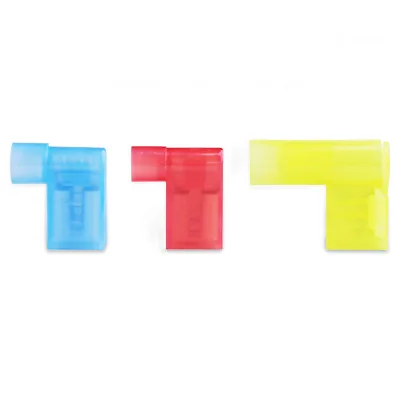
The physical characteristics of these terminals are critical for compatibility. The observed product attributes specify a rectangular shape, aligning with the core keyword, though some market variations may include round profiles. The insulation color is a vital functional element, with common offerings including red, blue, yellow, and black, allowing for rapid visual identification of voltage levels or circuit phases. The "flag" designation often implies a specific crimping interface where the wire enters from the side or top, creating a terminal that projects outward like a flag. The production process for these items is predominantly cold pressing, a method that work-hardens the copper to enhance mechanical strength without compromising the material's conductivity. This process ensures that the terminal maintains its shape under vibration and thermal cycling, which is essential for applications in transmission of electrical signals and general conductivity.
Critical Technical Specifications and Compatibility Verification
When sourcing rectangular flag insulated terminals, buyers must rigorously verify technical specifications to ensure the component matches the wire harness requirements. The wire range is a primary constraint; observed data indicates two distinct ranges depending on the specific model and current rating. One set of specifications supports a wire cross-section of 0.5mm² to 6mm², while another broader range accommodates 0.5mm² to 25mm². Additionally, some variants are specified in American Wire Gauge (AWG) terms, covering the range of AWG 10 to 22. Procurement teams must cross-reference their harness designs against these specific ranges to prevent crimping failures or loose connections.
The current carrying capacity (I Max) is another non-negotiable specification. The supply data lists multiple current ratings, including 10A, 15A, 24A, 19A, 27A, 37A, and 48A. These figures dictate the thermal limits of the terminal under load. A terminal rated for 10A should not be substituted for a 48A application without a thorough engineering review, as the copper cross-section and insulation thickness are directly correlated to the current rating. The model numbers observed, such as FLDNY, MG, and CE, along with specific designations like FLDNY 2-250, serve as unique identifiers for these technical configurations. Buyers should not assume interchangeability between models with different model numbers, as the internal barrel dimensions and insulation lengths may vary significantly.
| Specification Parameter | Observed Range/Values | Verification Requirement |
|---|---|---|
| Material | Copper | Verify purity and conductivity grade |
| Insulation Material | PA (Polyamide) | Confirm thermal and chemical resistance |
| Wire Range (Metric) | 0.5mm² - 6mm² / 0.5mm² - 25mm² | Match exact wire gauge of harness |
| Wire Range (Imperial) | AWG 10 - 22 | Cross-reference with AWG standards |
| Current Rating (I Max) | 10A, 15A, 24A, 19A, 27A, 37A, 48A | Ensure rating exceeds maximum circuit load |
| Production Process | Cold Pressing | Confirm manufacturing method consistency |
| Shape | Rectangular | Validate physical footprint for assembly |
Compliance, Certification, and Regulatory Standards
Navigating the regulatory landscape is a pivotal step in sourcing electrical components. The market data presents a complex array of certifications and standards that suppliers may claim. High-confidence facts indicate that products can carry certifications such as UL, CE, RoHS, ISO9001, TUV, SASO, SGS, CQC, and OHSAS 18001. Furthermore, specific product standards like FLDNY are noted as internal or industry-specific designations. It is imperative for buyers to understand that the presence of a certification mark does not automatically apply to every SKU; verification must be conducted on a per-product basis.
The "UL" certification is particularly significant for North American markets, often requiring specific testing protocols for insulation flammability and electrical safety. Similarly, "CE" and "RoHS" are critical for European compliance, ensuring the product meets safety directives and restricts hazardous substances. The "ISO9001" certification indicates that the supplier's quality management system meets international standards, which is a strong indicator of process reliability. Other standards like "TUV" and "SASO" are relevant for specific regional markets, such as Germany and the Middle East, respectively. Buyers should request valid, up-to-date certification documents for the specific batch or model they intend to purchase, rather than relying on general supplier claims. The absence of a specific certification in the provided facts should not be interpreted as a negative, but rather as a signal to verify the compliance status directly with the manufacturer before finalizing the order.
Cost Drivers and Economic Factors in Procurement
The pricing structure for rectangular flag insulated terminals is influenced by several dynamic factors, including raw material costs, production volume, and packaging complexity. The observed price range in the market data spans from 0 to 17 USD, which likely reflects a variance between bulk unit pricing and small sample orders, or potentially different product tiers. The Minimum Order Quantity (MOQ) varies widely, ranging from 1 unit to 100,000 units. This wide range suggests that suppliers are flexible, catering to both prototyping needs and large-scale industrial production.
Material costs, specifically the price of copper, are a primary driver of the final unit price. Fluctuations in the global copper market will directly impact the cost of these terminals. Additionally, the insulation material, identified as PA, adds to the cost, and the color of the insulation can sometimes influence pricing if specific pigments are required. The packaging details, which include options like 1000 pcs/bag, 500 pcs/bag, or 100 pcs/bag, also affect the logistics cost. Bulk packaging reduces per-unit handling costs, whereas smaller packaging units may be necessary for just-in-time manufacturing but incur higher shipping and handling fees. The "Supply Ability" of 1,000,000 bags per week indicates that high-volume suppliers can offer competitive pricing through economies of scale, but buyers must ensure their order volume aligns with the supplier's capacity to avoid lead time delays.
Typical Applications and Industry Integration
Rectangular flag insulated terminals are versatile components utilized across a diverse range of industries. The application data highlights their use in the transmission of electrical signals and general conductivity. Specific industry sectors mentioned include communications wiring harnesses, automobile manufacturing, computer hardware, home appliances, motorcycles, and RF (Radio Frequency) systems. In the communications sector, these terminals are essential for maintaining signal integrity in complex wiring harnesses. In the automotive and motorcycle industries, the durability and vibration resistance provided by the cold-pressed copper construction are vital for safety-critical connections.
The "Single Hole Terminals" and "Spade Terminal" classifications found in the data suggest that these components are often used in environments where quick connection and disconnection are required, such as in control panels or junction boxes. The "Terminal block" application further indicates their use in organizing and securing multiple wire connections. The versatility of the color coding (Red, Blue, Yellow, Black, Colorful) makes them particularly suitable for applications where circuit identification is crucial, such as in industrial machinery or complex electronic assemblies. Buyers should ensure that the selected terminal model matches the specific environmental conditions of the application, such as temperature extremes or exposure to oils and solvents, which are common in automotive and industrial settings.
Supplier Evaluation and Quality Control Protocols
Evaluating a supplier for rectangular flag insulated terminals requires a multi-faceted approach that goes beyond price comparison. The supply chain data indicates that manufacturers are located in various regions of China, including Wenzhou and Jiangxi, with dispatch ports in Shenzhen and Shanghai. This geographic concentration suggests a mature supply chain ecosystem, but buyers must still perform due diligence on individual suppliers. Key evaluation criteria include the supplier's production history, with some entities noting a factory establishment date of 1999, which may imply a long-standing track record.
Quality control should focus on the consistency of the cold-pressing process and the integrity of the insulation. Buyers should verify that the supplier adheres to the stated standards, such as ISO9001, and that they have a robust internal testing regime. The "General Wiring Harness" classification suggests that these terminals are often part of a larger assembly process, so the supplier's ability to provide consistent crimping tools or compatibility with standard crimping machines is a valuable asset. Furthermore, the "Customization" attribute being available is a significant advantage for buyers with unique requirements, allowing for tailored wire ranges or insulation colors. However, customization should be approached with caution to ensure that the modified specifications do not compromise the electrical or mechanical performance of the terminal.
Long-Term Procurement Considerations and Supply Chain Resilience
Sourcing electrical components is a long-term commitment that requires planning for supply chain resilience. The observed "Mogen" attribute, noting "Factory From 1999," suggests that established suppliers may offer greater stability. However, buyers must also consider the "Lead Time" and "Port of Dispatch" when planning their inventory. The availability of multiple dispatch ports (Shenzhen and Shanghai) provides flexibility in logistics, but buyers should confirm current port congestion and shipping schedules.
Long-term procurement strategies should also account for the potential for specification changes. As technology evolves, wire gauges and current ratings may shift, requiring terminals with updated specifications. The availability of customization allows suppliers to adapt to these changes, but buyers should establish clear communication channels to manage these transitions. Additionally, the wide range of packaging options (100 to 1000 pcs/bag) allows for flexible inventory management, enabling buyers to adjust their stock levels based on production forecasts. Finally, maintaining a relationship with suppliers who hold multiple certifications (UL, CE, RoHS, etc.) ensures that the supply chain remains compliant with evolving global regulations, reducing the risk of product recalls or market access issues. By focusing on these strategic elements, buyers can secure a reliable supply of high-quality rectangular flag insulated terminals that meet their technical and operational needs.
FAQs
What material is used for rectangular flag insulated terminals?
These terminals are primarily manufactured from copper to ensure superior electrical conductivity and mechanical durability. The insulation material is typically Polyamide (PA), which provides necessary dielectric strength and resistance to heat and chemicals.
Which wire ranges are compatible with these terminals?
Compatible wire ranges vary by model, supporting cross-sections from 0.5mm² to 6mm² or up to 0.5mm² to 25mm². Some variants also accommodate American Wire Gauge sizes ranging from AWG 10 to 22.
Can these terminals handle high current loads?
Yes, the current carrying capacity ranges from 10A up to 48A depending on the specific model and configuration. Buyers must verify that the terminal rating exceeds the maximum circuit load to prevent thermal failures.
What certifications are available for these electrical components?
Available certifications include UL, CE, RoHS, ISO9001, TUV, SASO, SGS, and CQC. Buyers should request valid documents for the specific batch, as certifications do not automatically apply to every SKU.
How are these terminals produced and shaped?
The production process predominantly uses cold pressing to work-harden the copper and enhance mechanical strength. The shape is typically rectangular, though some market variations may include round profiles for specific mounting arrangements.
What colors are available for the insulation?
Common insulation colors include red, blue, yellow, and black to allow for rapid visual identification of circuit phases. Some listings also offer colorful options to meet specific industry identification requirements.
Which industries utilize these insulated terminals?
These terminals are widely used in communications wiring harnesses, automotive manufacturing, computer hardware, and home appliances. They are also essential for motorcycle electrical systems and RF applications requiring signal transmission.